

Product releases, updates, and general improvements to Ditto

What’s New

July 7, 2026

June Product Releases

Iterate and refine your AI content system, with built-in analytics and tools to give feedback to AI generation.

Style guide analytics surfaces usage data directly on your style guide rules. For each style guide in your Ditto workspace, you'll see:

  • How many checks have run against it
  • How many times it triggered a suggestion
  • How many of those suggestions were accepted vs. rejected
  • An overall acceptance rate percentage

This makes it possible to prove the effectiveness of the system you’ve built, while continuously sharpening it as it’s used.

Suggestion feedback lets you capture the why behind a rejection. For each suggestion Ditto generates, your team can now accept it with a thumbs up or reject it with a thumbs down along with adding a note on why. That feedback accumulates against the rule that triggered it — giving Ditto the raw material to refine guidance, update the context around a rule, or retire a rule that's no longer relevant.

Together, these features close the loop between writing down guidelines, and actually putting a content system to work.
June 29, 2026

Ditto Scan

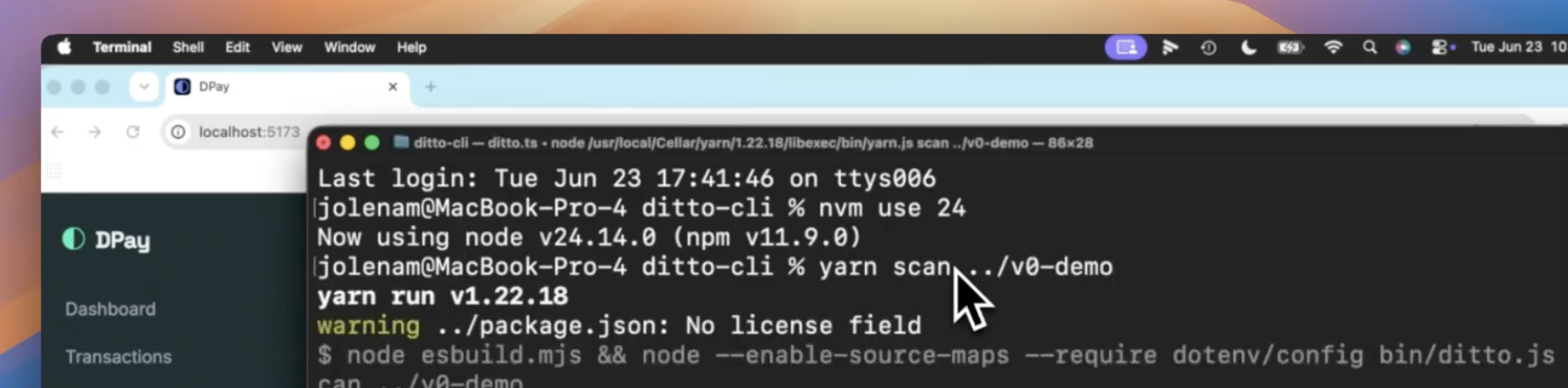
Ditto Scan is a new CLI command that scans your codebase, identifies your user-facing strings, and sets up your content system for you — automatically, based on what's already in production.

Run a new Ditto CLI command in your codebase. Continue setup in the Ditto web app. In moments, Ditto has extracted strings, metadata, translations, and content style standards based on what made it to production. You can review these extractions to assemble a working V1 of your content system: a component library, style guides, translation management, and the metadata infrastructure to keep it all connected.

Read more about Ditto Scan here.

June 22, 2026

Ditto Specs

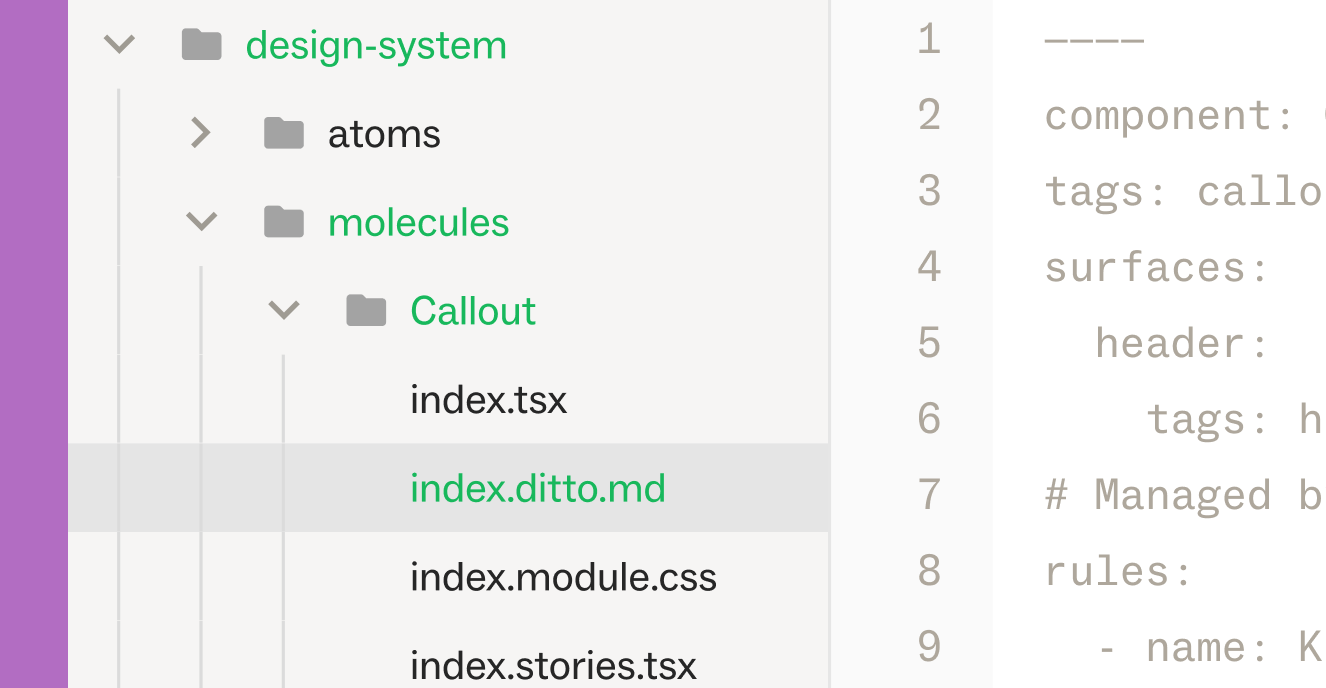
Ditto Specs are .ditto.md files that live in your codebase alongside your components. Each one declares the text surfaces a component renders — the specific pieces of user-facing copy like a headline, a button label, helper text, a tooltip — and carries the style guide rules that apply to those surfaces, synced from the Ditto platform.

Specs work at every level of your codebase.

  • A workspace.ditto.md at the repo root sets the floor: universal voice, tone, and brand rules that apply everywhere.
  • Component-level specs layer on specifics. An agent working on a deeply nested UI component references the right rules for the specific surface it's touching.

Read more about how to use Ditto Specs here.

Newsletter

Never miss an update: Sign up for updates, exclusive insights, and product releases.

Thank you! Your submission has been received!
Oops! Something went wrong while submitting the form.
Help Center

Get the most out of your Ditto workspace.

Help Center
Dev Hub

Explore Ditto’s capabilities for developers.

Dev Hub
Newsletter

Never miss an update: Sign up for updates, exclusive insights, and product releases.

Thank you! Your submission has been received!
Oops! Something went wrong while submitting the form.